
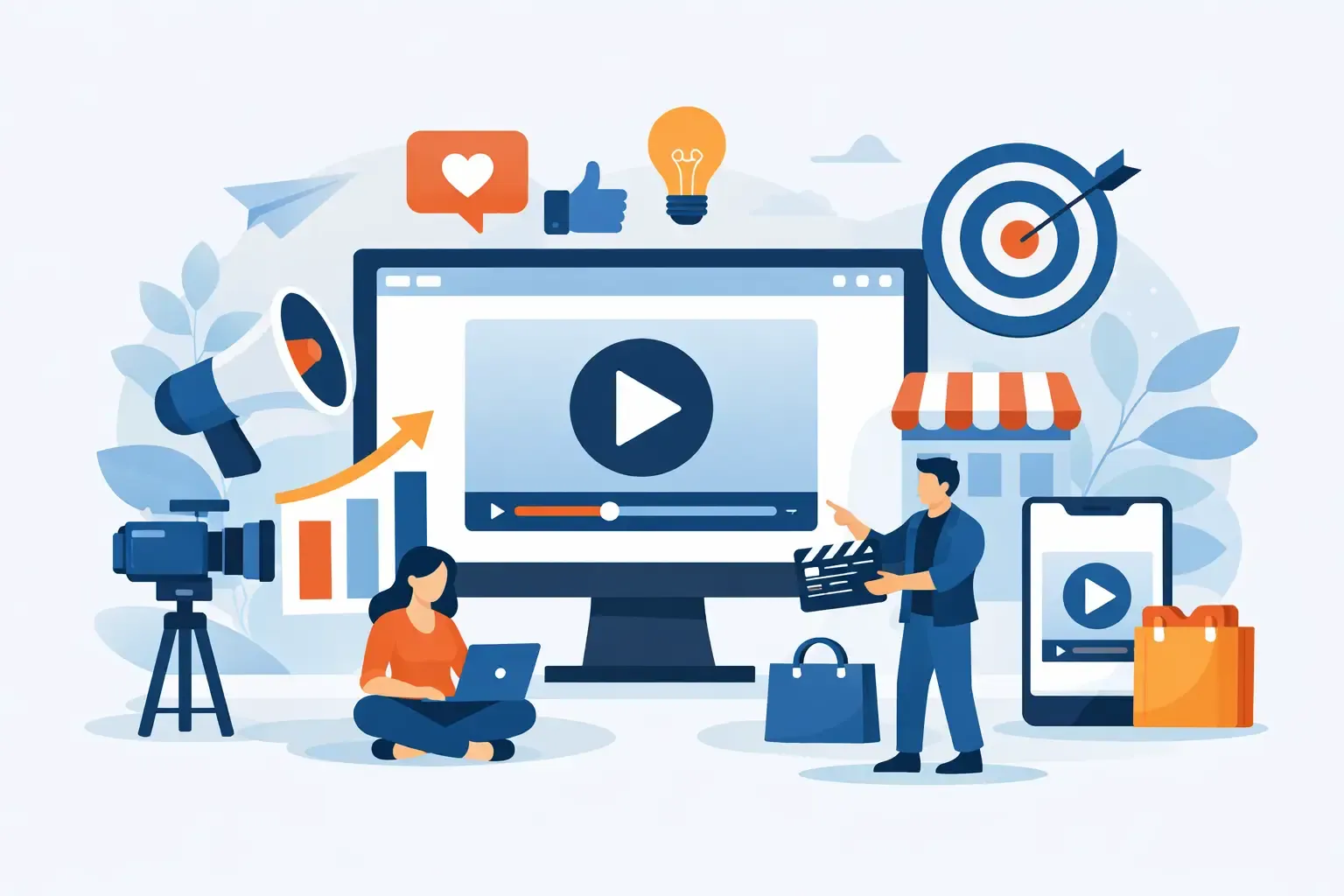
A polished logo animation is nice. A clear 30-second video answering a real customer question is usually worth more.
That is the practical truth about video content for small business marketing. Most small business owners do not need a studio setup, a full-time editor, or a complicated content calendar. They need videos that help people trust them faster, understand the offer faster, and take action faster.
If you run a local service business or a growing company, video works best when it supports sales. It should answer questions, remove hesitation, and show the real people behind the business. That is what makes it useful, and that is what makes it more likely to produce leads instead of just views.
Why video content for small business marketing works
Small businesses rarely win on brand awareness alone. They win on trust, speed, and clarity. Video helps with all three.
A good video gives people more context than a block of text ever will. They can hear your voice, see your work, and get a better feel for whether your company is professional, reliable, and easy to work with. For service businesses especially, that matters. People are not just buying a service. They are buying confidence that you will show up, communicate well, and do the job right.
Video also shortens the path to action. Someone researching roof repair, family law, landscaping, med spa services, or commercial cleaning usually has a few basic questions before they call. What do you do? Who is it for? How does the process work? What makes you different? Short videos can answer those questions quickly.
There is also a visibility benefit. Video can improve engagement on social platforms, support time on page when embedded on a website, and give you more ways to repurpose one piece of content across your marketing. But reach is not the main point. If a video gets 300 views from the right people and brings in three qualified leads, that is better than a flashy clip with 10,000 views and no business result.
The biggest mistake small businesses make with video
They treat video like a production project instead of a sales tool.
That usually leads to delays, overthinking, and content that looks polished but says very little. A lot of small business videos sound generic because they try to impress instead of help. They use broad statements like "we care about quality" or "customer satisfaction is our priority" without showing anything concrete.
Useful video is more specific. It explains how your estimate process works. It shows before-and-after results. It answers what customers can expect in the first week. It addresses pricing ranges when appropriate. It explains the difference between one option and another.
That kind of content may feel less exciting to create, but it is far more effective. It meets buyers where they already are.
What videos should a small business make first?
If your time is limited, start with the videos that remove friction from buying.
The introduction video
This is your simple "who we are and how we help" video. Put it on your homepage, service pages, and social channels. Keep it short. A minute or less is often enough.
The goal is not to tell your entire company story. The goal is to help a potential customer understand what you do, who you serve, and what the next step looks like.
The FAQ video
Take the questions customers already ask by phone, email, or during estimates and turn them into short videos. These work because they are built around actual buying concerns.
Questions like "How much does it usually cost?" "How long does the process take?" and "Do I need to be on-site?" are great starting points. If your team answers the same question every week, that is a strong sign it should become a video.
The proof video
This can be a customer testimonial, a case study, or a project walkthrough. Show the result and explain the problem you solved.
For many businesses, this is more persuasive than a standard promotional video because it gives people evidence. They get to see what happened, not just hear claims.
The process video
People hesitate when they do not know what happens next. A process video removes that uncertainty.
Explain what happens after someone contacts you, how scheduling works, what timelines look like, what you need from the client, and what success looks like. That clarity can improve lead quality because people come in with more realistic expectations.
Keep the production simple
This is where small businesses often get stuck. They assume video means expensive gear, hours of editing, and a perfect script.
It does not.
A modern phone, decent lighting, and clean audio can go a long way. In most cases, audio matters more than camera quality. If people can hear you clearly and the message is useful, they will forgive a lot. If the audio is bad, even a great-looking video feels amateur.
Natural light near a window is often enough. A simple clip-on microphone is usually worth the small investment. Record in a quiet room. Keep the background clean. Speak like you would to a real customer, not like you are reading a commercial.
You do not need to memorize every line. In fact, videos often feel better when they sound slightly conversational. Use a few talking points, keep your message focused, and aim for clarity over polish.
There is a trade-off here. High-end production can help if you are building a major brand campaign or launching something at a larger scale. But many small businesses get better returns from posting practical, honest videos consistently than from spending months on one expensive shoot.
Where to use your video content
A lot of owners think video starts and ends on social media. That leaves value on the table.
Your website is one of the best places to use video because visitors there already have intent. They are checking you out. They are comparing options. They are deciding whether to contact you. A short, relevant video on a homepage, service page, about page, or FAQ page can help move that decision along.
Social media still matters, especially for awareness and repeat exposure. Short clips, job site updates, quick tips, behind-the-scenes footage, and customer stories can all work well there. The key is matching the format to the platform instead of posting the exact same thing everywhere without context.
Email can also be effective. Adding video to lead follow-up or customer onboarding helps make communication feel more personal. And if you are running ads, short direct-response videos can outperform static images in some industries, though not always. It depends on your audience, your offer, and whether the message is strong enough to stop the scroll.
How to make video content that actually leads to calls
Start with customer intent, not content ideas.
Think about what a potential buyer needs to believe before reaching out. Then make videos that help them get there. Maybe they need proof that you handle jobs like theirs. Maybe they need to know you serve their area. Maybe they need reassurance that the process is straightforward.
That is the difference between content that gets attention and content that creates leads. Attention matters, but only if it moves people closer to action.
It also helps to include a clear next step. Not a hard sell, just direction. Tell people to call, request a quote, schedule a consult, or visit the service page. If the video is useful but gives no next move, some viewers will simply leave.
Consistency matters too, but consistency does not mean daily posting. For most small businesses, one or two useful videos a month can outperform a rushed volume strategy. A smaller library of relevant videos is better than a larger pile of random content.
What to measure
Views are easy to track and easy to misread.
A better question is whether your videos improve business outcomes. Are people staying longer on key pages? Are leads mentioning specific videos? Are sales calls smoother because prospects already understand your process? Are you seeing better engagement on the topics tied to real customer questions?
Sometimes the payoff is direct. A prospect watches a testimonial video and fills out your form. Sometimes it is indirect. Video helps warm people up before they contact you, which means less skepticism and fewer repetitive questions.
That is why the best video strategy is rarely about going viral. It is about making your marketing easier to trust.
For small businesses, that is usually the win. Not more content for the sake of content. Just clearer communication, stronger credibility, and a simpler path from interest to inquiry. If you can do that on camera, even in a plain office or at a job site, you are already ahead of a lot of competitors.