A plumbing company needs calls this week. A dental office wants a steady flow of new patients six months from now. A home service brand wants both. That is where the google ads vs local seo question gets real fast – because the right answer depends on your timeline, budget, competition, and how your website converts once people land on it.
For most small business owners, this is not a marketing theory debate. It is a cash flow decision. If you put money into the wrong channel at the wrong time, you feel it. If you choose the right one, your website stops acting like an online brochure and starts helping bring in leads.
Google Ads vs local SEO: the core difference
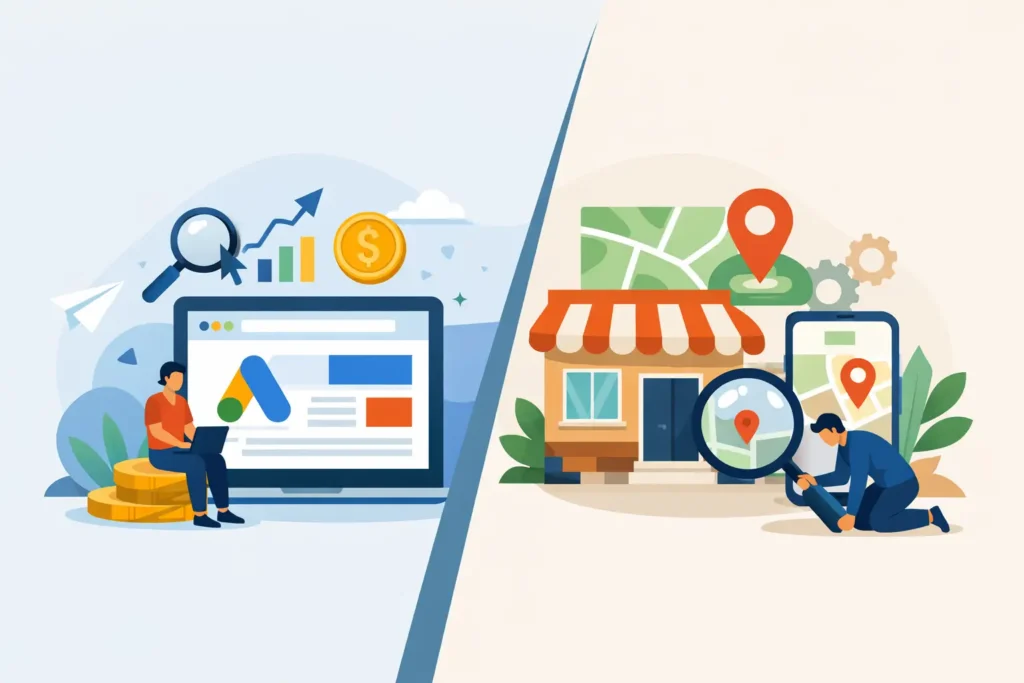
Google Ads buys visibility. Local SEO earns visibility.
With Google Ads, you can appear at the top of search results almost immediately for the terms you target. You set a budget, build campaigns, and pay when someone clicks. That speed is the biggest advantage, especially if you need leads now or you are launching in a new market.
Local SEO works differently. It focuses on improving your visibility in local search results, especially your Google Business Profile, map pack presence, local landing pages, reviews, and on-site signals that help Google trust your business in a specific area. It usually takes longer to build, but strong local rankings can keep generating leads without paying for every click.
That sounds simple enough, but the trade-offs matter.
When Google Ads makes more sense
If your business needs demand quickly, ads are usually the faster play. That is especially true for emergency services, seasonal businesses, newer companies with little online presence, or businesses entering a competitive area where local SEO will take time to gain traction.
Ads are also useful when you want control. You can choose which services to push, which cities to target, what hours your campaigns run, and where your budget goes. If you offer water heater replacement, legal consultations, med spa services, or high-ticket repairs, that level of targeting can be valuable.
There is another practical benefit: testing. Google Ads can show you which keywords actually lead to calls and form submissions. That data can help shape your website copy, service pages, and longer-term SEO strategy.
The downside is obvious. The second you stop paying, the visibility stops too. And depending on your industry, cost per click can get expensive fast. If your landing pages are weak, your tracking is off, or your offer is unclear, you can burn through budget without much to show for it.
Ads are not a shortcut around a bad website. They amplify what is already there. If people click and land on a slow page, a generic homepage, or a site with no trust signals, the campaign struggles no matter how well it is set up.
When local SEO makes more sense
Local SEO tends to make the most sense for businesses that want durable visibility in a specific service area. Think dentists, roofers, chiropractors, med spas, electricians, family law firms, or pretty much any business that wins customers from nearby searches.
When local SEO is done well, it can produce strong lead quality. People searching with local intent are often closer to taking action. They are looking for a provider near them, checking reviews, comparing credibility, and deciding who feels trustworthy.
That trust piece matters more than many owners realize. A well-optimized Google Business Profile, a consistent review profile, clear service pages, and a solid website can create a compound effect. You are not just ranking. You are making it easier for someone to choose you.
The catch is patience. Local SEO usually does not produce instant results, especially in competitive markets. It takes time to improve your site, optimize local pages, earn reviews, strengthen your profile, and build enough relevance for Google to move you up. If you need leads next week, local SEO alone may not solve the problem.
It also requires consistency. A one-time setup helps, but local SEO works best as an ongoing effort. Profiles need updates, reviews need attention, pages need refinement, and rankings need monitoring.
Cost is not as straightforward as it looks
A lot of business owners compare google ads vs local seo by asking which one is cheaper. Fair question, but the better question is which one gives you better return for your current stage.
Google Ads has direct and visible costs. You see the ad spend. You see management fees if someone runs the campaigns. You can usually tie leads back to budget pretty quickly, assuming tracking is in place.
Local SEO often feels less expensive because you are not paying per click, but it still requires investment. You may need website improvements, better local landing pages, review generation, Google Business Profile optimization, technical cleanup, content work, and ongoing maintenance. The spend is different, not absent.
In many cases, ads cost more in the short term but produce faster feedback. Local SEO takes longer to pay off but often becomes more efficient over time. That is why the smartest choice is usually based on timing, not ideology.
Lead quality depends on more than the channel
Some people say SEO leads are better than ad leads. Sometimes that is true. Sometimes it is not.
A lot depends on what the person searched, what page they landed on, and how well your business matches the need. A local SEO lead may be highly qualified if they found your business profile, liked your reviews, and called from a service-specific page. An ad lead can be just as strong if the campaign is tightly targeted and the landing page clearly speaks to the problem they want solved.
The opposite is true too. Broad match keywords, sloppy targeting, weak messaging, or a generic site can turn paid traffic into junk. Local traffic from irrelevant searches or poorly optimized pages can waste time as well.
The channel gets the click. Your website and offer do the heavy lifting after that.
The best choice usually depends on your business stage
A newer business often benefits from starting with ads while building local SEO in the background. That gives you a way to generate opportunities now while laying the groundwork for stronger organic visibility later.
An established business with a solid reputation but weak online presence may get more long-term value from investing in local SEO first, especially if reviews, map visibility, and service pages are underdeveloped.
A business in a highly competitive market may need both. If multiple competitors dominate local rankings and ad placements, relying on one channel can leave you exposed. Running ads while improving local SEO gives you more surface area in search results and more ways to capture demand.
This is where one-size-fits-all advice falls apart. A mobile detailer, criminal defense attorney, HVAC company, and med spa are all local businesses, but their buying cycles, search behavior, and average customer value are very different.
Google Ads vs local SEO: what a balanced strategy looks like
For many small businesses, the best plan is not choosing one forever. It is sequencing them correctly.
Start with the goal. If the goal is immediate lead flow, ads can get attention fast. But you should not run paid traffic into a weak digital setup. Before spending heavily, make sure your site loads well, your service pages are clear, your forms work, your phone number is easy to tap, and your trust signals are visible.
At the same time, invest in local SEO foundations. That means cleaning up your Google Business Profile, building out service area pages where appropriate, tightening on-page SEO, collecting reviews consistently, and making sure your website actually supports local search intent.
Over time, the balance can shift. As local SEO starts producing calls and map visibility improves, you may be able to reduce ad spend on some services or use ads more strategically for high-margin jobs, seasonal pushes, or new locations.
That kind of setup gives you speed and staying power. It also reduces risk. If ad costs rise, you still have organic visibility. If rankings fluctuate, paid campaigns can help stabilize lead flow.
What small business owners should avoid
The biggest mistake is treating either channel like magic. Google Ads will not fix weak positioning. Local SEO will not work well on a thin, outdated site. Neither strategy performs at its best if your business lacks reviews, clear messaging, or a real follow-up process.
Another mistake is chasing traffic instead of leads. More clicks sound good until you realize they are not turning into calls, appointments, or revenue. What matters is not whether you showed up. It is whether the right people reached out.
That is why strategy should start with your actual sales process. What services are most profitable? Which locations matter most? How quickly do you need results? What happens after someone contacts you? Those answers should guide the channel mix.
If you are deciding between the two, think less about which tactic wins the argument and more about what your business needs next. The right move is the one that fits your timeline, supports your margins, and turns search visibility into real conversations with customers.